
freedom

Large AI models should not be used in administration without guardrails, verification, and experienced human review
Fluency is not reliability Large language models create a dangerous illusion for both public administration and private organizations. They look like universal productivity engines: fast drafting, fast summaries, fast answers, fast recommendations. But speed and fluency are not the same as accuracy, accountability, or institutional reliability. A model can produce a polished paragraph and still … Read more
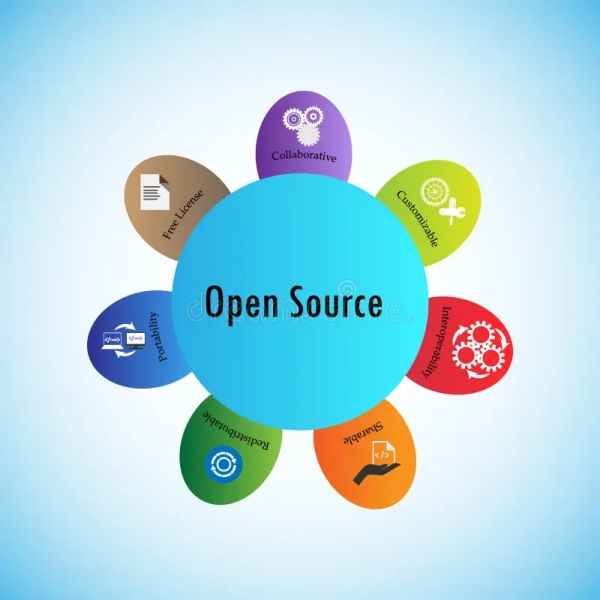
From Catalogues to Real Adoption: Why Europe Must Back Open Source That People Can Actually Use

Europe does not suffer from a lack of open source. It suffers from a lack of large-scale adoption. Across the European Union, the policy direction is already clear. Interoperability, reuse and cross-border public service improvement are now central to Europe’s digital agenda. Open source has also been increasingly linked to reduced dependency, stronger digital autonomy … Read more

When AI Solves Open Mathematical Problems

On February 28, 2026, Donald Knuth, professor emeritus at Stanford University and author of the landmark work The Art of Computer Programming, published a note titled “Claude’s Cycles” describing how Anthropic’s Claude Opus 4.6 model solved an open problem in combinatorial mathematics that he had been working on for weeks. The announcement marks a significant … Read more

AI Agents

Benefits and risks for the public and private sectors AI agents are not just better chatbots. They are systems that combine language models with tools, memory, retrieval, and the ability to execute multi step actions across software environments. That combination gives them real productive potential for both the Greek public sector and private firms, but … Read more

Low-Cost, Open-Source Artificial Intelligence Models

The Green and Sovereign Choice for Greece and Europe Europe’s artificial intelligence strategy stands at a structural inflection point. Dependence on hyperscale cloud infrastructures located outside the European Union increases systemic vendor lock-in, geopolitical exposure, and regulatory vulnerability. Simultaneously, the accelerating energy consumption of large AI infrastructures threatens Europe’s sustainability commitments and long-term competitiveness. The … Read more

This Is Not the AI We Were Promised

Scientific reasons why uncritical LLM adoption in government is unsafe Michael Wooldridge’s Royal Society lecture makes a crucial point for public policy: today’s large language models are not “reasoning minds” but probabilistic next-token predictors. They generate fluent text without an internal notion of truth, accountability, or epistemic humility. This design reality matters most in the … Read more

Artificial Intelligence and the Public Interest

Scientific Arguments Against Uncritical Deployment in the Public Sector Artificial Intelligence is frequently presented as a neutral instrument of modernization within public administration. Claims of efficiency and cost reduction dominate policy discourse. Yet a growing body of scientific research demonstrates that uncritical deployment of AI systems in public institutions poses structural risks to democratic governance, … Read more

Open Source AI Beyond Scale

European low cost, open source local LLMs as a strategic alternative The global AI narrative remains focused on ever larger language models, demanding massive computational resources and reinforcing dependence on a handful of providers. As critics such as Gary Marcus have argued, this path leads to diminishing returns without resolving fundamental issues of reasoning and … Read more

From German Commons to Greek Commons

A policy case for Greek as a national and European language data infrastructure Large language models depend on vast amounts of text, but scale without legal clarity produces fragile systems. Datasets built on opaque web crawling cannot guarantee lawful reuse, redistribution, or long-term sustainability. The German Commons provides a clear alternative: 154.56 billion tokens of … Read more

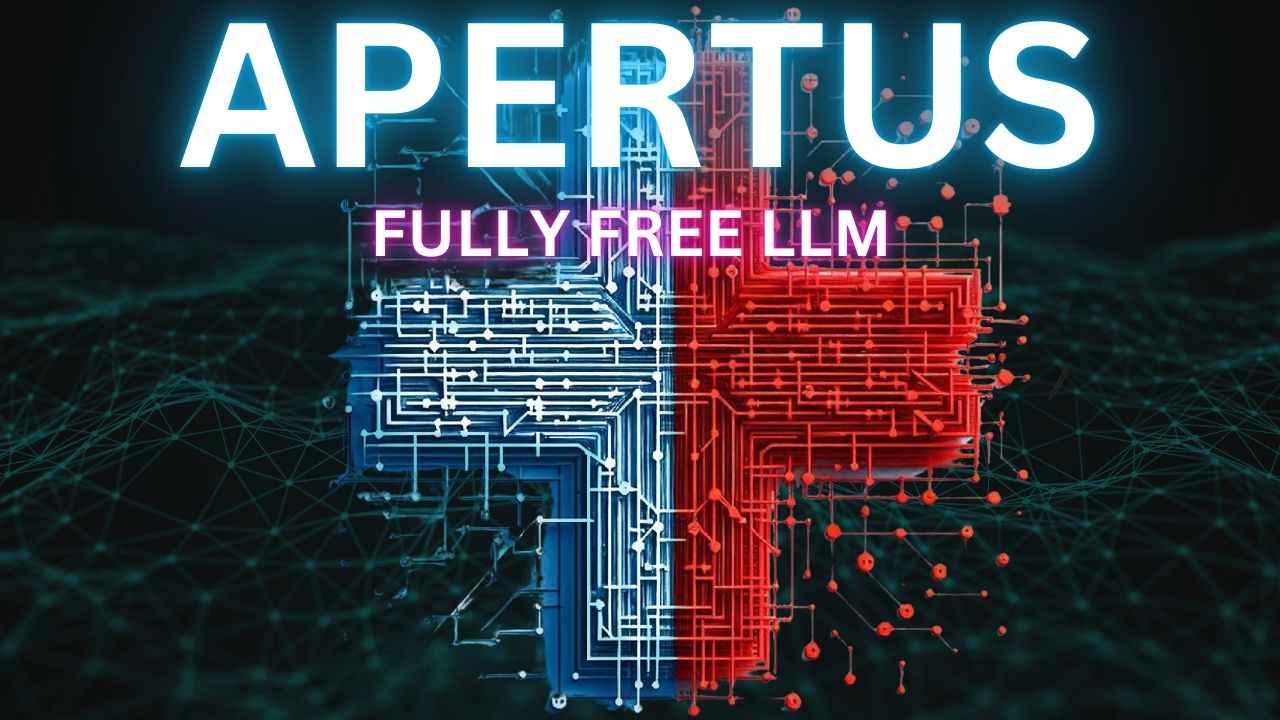
Apertus AI: A Fully Open Multilingual LLM for Local and Customized Deployment

Apertus AI is one of the most transparent and technically mature efforts to build a fully open-source large language model. Developed in Switzerland and released together with its source code, training documentation and model weights, it offers an unprecedented level of reproducibility and independence from closed ecosystems. This makes it ideal for researchers, public-sector institutions … Read more