freedom

We Still Do Not Have a Theory of Consciousness, or Proof That LLMs Can Feel

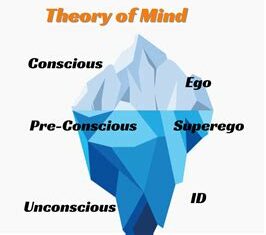
The remarkable behaviour of language models makes machine consciousness a legitimate scientific question. It does not justify confusing linguistic competence, internal computation or self-reference with subjective experience. Large language models can discuss fear, pain, love, uncertainty and even their own supposed internal states. They can write “I think”, “I feel” or “I am afraid” with … Read more

Data Centers Must Become Open and Sustainable Infrastructure

The rapid development of Artificial Intelligence is making something increasingly visible that we often tend to overlook: the digital ecosystem has a very tangible physical foundation. AI models, cloud services and public digital applications run inside buildings filled with processors, storage systems, power supplies, networks, cooling loops and backup power systems. Data centers consume electricity … Read more

Data Fabrics: The Infrastructure for Useful and Trustworthy Local AI

Most discussions about artificial intelligence begin with models. Which model is stronger, faster, cheaper or more capable? For public administrations and private enterprises, however, the decisive question is different: what data does the model reason over, who governs that data, how is it connected to real workflows, and how can every answer be traced back … Read more

Local Open AI Models: Public Infrastructure Instead of Digital Dependency

Artificial intelligence is entering public administration, healthcare, education, local government and state security services. The central question is not whether public institutions will use AI. They already will. The real question is who will control the infrastructure, the data, the models, the logs and the rules of use. Public authorities can either build internal capacity … Read more

Local Open AI and AI Factories: a practical architecture for safer, cheaper and more democratic AI

From PHAROS to local models: a layered architecture for open AI The right strategy for artificial intelligence is not to choose one single technological solution. Not everything needs to run on a supercomputer, and it is equally unreasonable for every public body, university, school or business to depend permanently on commercial cloud APIs. The rational … Read more

How to Reduce Hallucinations in RAG Systems

From better retrieval to answer inspection before delivery Retrieval-Augmented Generation was introduced as a practical answer to one of the central weaknesses of large language models: their ability to produce fluent, confident text even when they do not know the answer. The core idea is straightforward. Before the model answers, the system retrieves relevant documents. … Read more

How to Use Large Language Models?

Convenience is not the same as learning Large language models are now part of everyday life in education, work, and public communication. They draft text, summarize documents, suggest ideas, organize arguments, and respond instantly to complex questions. Their usefulness is obvious. But that usefulness becomes a problem when speed replaces effort, and assistance turns into … Read more

GlossAPI and the Swiss AI Initiative: a strategic investment in Greek as public digital infrastructure

An approval that changes the scale of ambition The approval of the proposal “Enhancing multilingual foundation models through lexicographic grounding: advancing GlossAPI for Apertus Greek language integration” by the Swiss AI Initiative is more than a welcome grant decision. It is a recognition that Greek should be treated as critical digital infrastructure in the age … Read more

When AI Solves Open Mathematical Problems

On February 28, 2026, Donald Knuth, professor emeritus at Stanford University and author of the landmark work The Art of Computer Programming, published a note titled “Claude’s Cycles” describing how Anthropic’s Claude Opus 4.6 model solved an open problem in combinatorial mathematics that he had been working on for weeks. The announcement marks a significant … Read more

From German Commons to Greek Commons

A policy case for Greek as a national and European language data infrastructure Large language models depend on vast amounts of text, but scale without legal clarity produces fragile systems. Datasets built on opaque web crawling cannot guarantee lawful reuse, redistribution, or long-term sustainability. The German Commons provides a clear alternative: 154.56 billion tokens of … Read more