freedom

Local Open AI Models: Public Infrastructure Instead of Digital Dependency

Artificial intelligence is entering public administration, healthcare, education, local government and state security services. The central question is not whether public institutions will use AI. They already will. The real question is who will control the infrastructure, the data, the models, the logs and the rules of use. Public authorities can either build internal capacity … Read more

Local Open AI and AI Factories: a practical architecture for safer, cheaper and more democratic AI

From PHAROS to local models: a layered architecture for open AI The right strategy for artificial intelligence is not to choose one single technological solution. Not everything needs to run on a supercomputer, and it is equally unreasonable for every public body, university, school or business to depend permanently on commercial cloud APIs. The rational … Read more

Why AI Companies Invest Hundreds of Billions

The race is not only about technology The current artificial intelligence boom is often described as a technological race. That description is incomplete. It is also a race for infrastructure, market power and control over the next layer of the digital economy. The largest technology companies are investing hundreds of billions of dollars every year … Read more

An always-on AI agent inside government is not a convenience, it’s a security risk

The shift from assistant to operator For a long time, public discussion treated artificial intelligence as an assistant. You ask, it answers. You upload a document, it summarizes it. You request a draft, it proposes one. That framing is already outdated. The real security issue begins when AI stops waiting for instructions and starts operating … Read more

From Catalogues to Real Adoption: Why Europe Must Back Open Source That People Can Actually Use

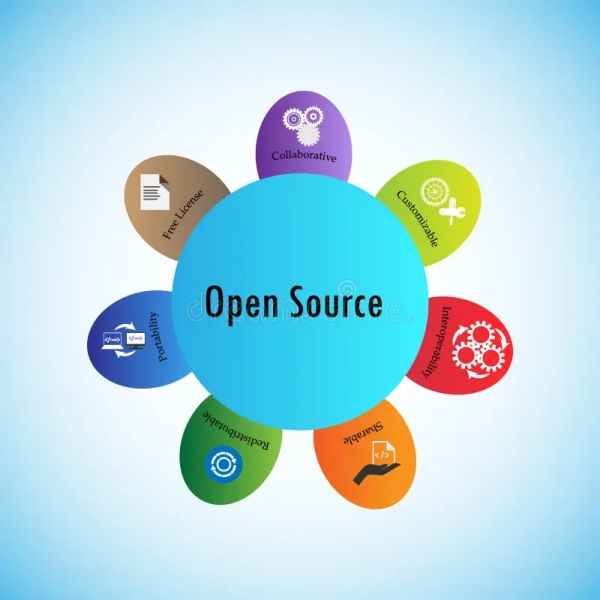
Europe does not suffer from a lack of open source. It suffers from a lack of large-scale adoption. Across the European Union, the policy direction is already clear. Interoperability, reuse and cross-border public service improvement are now central to Europe’s digital agenda. Open source has also been increasingly linked to reduced dependency, stronger digital autonomy … Read more

GlossAPI and the Swiss AI Initiative: a strategic investment in Greek as public digital infrastructure

An approval that changes the scale of ambition The approval of the proposal “Enhancing multilingual foundation models through lexicographic grounding: advancing GlossAPI for Apertus Greek language integration” by the Swiss AI Initiative is more than a welcome grant decision. It is a recognition that Greek should be treated as critical digital infrastructure in the age … Read more

Low-Cost, Open-Source Artificial Intelligence Models

The Green and Sovereign Choice for Greece and Europe Europe’s artificial intelligence strategy stands at a structural inflection point. Dependence on hyperscale cloud infrastructures located outside the European Union increases systemic vendor lock-in, geopolitical exposure, and regulatory vulnerability. Simultaneously, the accelerating energy consumption of large AI infrastructures threatens Europe’s sustainability commitments and long-term competitiveness. The … Read more

Artificial Intelligence and the Public Interest

Scientific Arguments Against Uncritical Deployment in the Public Sector Artificial Intelligence is frequently presented as a neutral instrument of modernization within public administration. Claims of efficiency and cost reduction dominate policy discourse. Yet a growing body of scientific research demonstrates that uncritical deployment of AI systems in public institutions poses structural risks to democratic governance, … Read more

Unlocking the Secrets of Oracle to PostgreSQL Migration, Scope & ROI

We would like to invite you to “Why and How to Switch from Oracle to PostgreSQL” webinar. If you’re considering a migration, this is your opportunity to get a strategic roadmap that helps you reduce Oracle costs and unlock the full potential of Postgres. In this session, you’ll learn how to: Presenters:Mostafa Zakaria, Sales Engineer … Read more

Open code for closed services: The Open Source paradox of the cloud

In recent years, several high-profile, single-vendor Open Source projects made the news by switching to more restrictive licenses. Some saw this as a manifestation of evil and greed, questioning the single-vendor model entirely; others interpreted it as a sign of the growing economic unsustainability of Open Source in the current market structure. Both arguments have … Read more