


The Green and Sovereign Choice for Greece and Europe
Europe’s artificial intelligence strategy stands at a structural inflection point. Dependence on hyperscale cloud infrastructures located outside the European Union increases systemic vendor lock-in, geopolitical exposure, and regulatory vulnerability. Simultaneously, the accelerating energy consumption of large AI infrastructures threatens Europe’s sustainability commitments and long-term competitiveness.
The strategic response is not to replicate foreign hyperscalers. It is to invest in low-cost, open-source AI models deployed on local and regional infrastructure. Such an approach ensures technological sovereignty, energy accountability, regulatory compliance, and domestic value creation.
From Hyperscale Dependency to Efficient Local AI
Recent open large language models (LLMs) comprising billions of parameters can now operate efficiently on commodity or mid-range hardware through advanced quantization and compression techniques. These approaches dramatically reduce memory footprint and bandwidth requirements without substantial degradation in task performance.
For public-sector and SME use cases, document processing, classification, retrieval, code assistance, multilingual support, efficient open models provide sufficient capability without requiring hyperscale infrastructure.
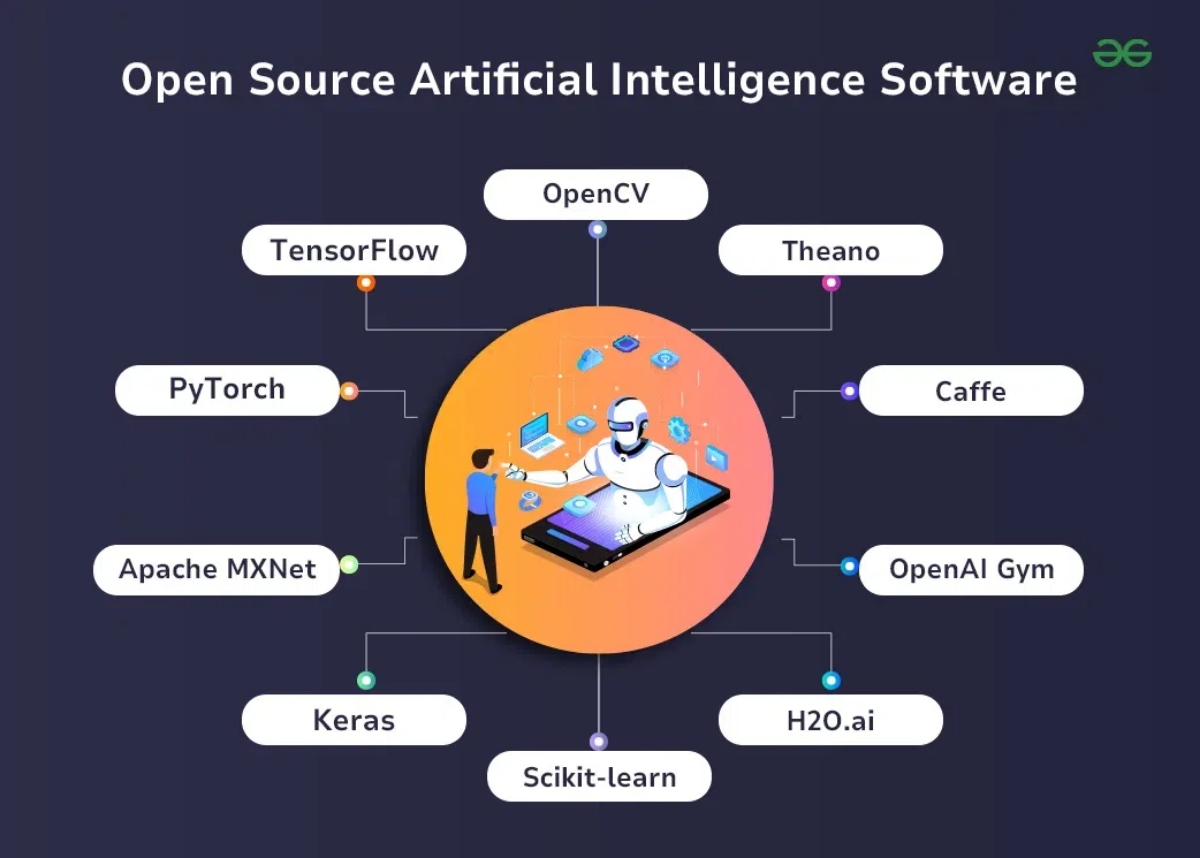
A mature open ecosystem now exists across:
- Inference engines
- Retrieval-augmented generation frameworks
- Observability systems
- Container orchestration
- Open databases
This stack makes sovereign AI architectures technically and economically viable. Local deployment is therefore not merely an engineering choice. It is a governance decision.
Green AI: Measurable and Accountable
AI sustainability must be evaluated at both training and inference layers. While frontier model training attracts attention, long-term environmental impact is often driven by inference workloads distributed across thousands of institutions.
In many public-sector scenarios, workloads are intermittent. A locally hosted AI node operating at 100–150 watts can be significantly more energy-efficient than continuous remote hyperscale interaction.
A Green AI deployment strategy requires:
- Model quantization and optimization
- Per-query energy measurement
- Hardware selection based on performance per watt
- Minimization of unnecessary data transfer
Open-source models uniquely enable this optimization because weights and source code are accessible for audit and modification.
Digital Sovereignty and Institutional Resilience
European regulation increasingly requires transparency, traceability, explainability, and risk management in AI systems. Processing sensitive administrative or health data on non-EU infrastructure introduces structural compliance risk.
Locally deployed open models provide:
- Full system visibility
- Control over data residency
- Internal auditability
- Reduced exposure to cross-border legal uncertainty
For Greece, where public administration manages high volumes of citizen data, sovereign AI infrastructure is a matter of institutional resilience.
Decentralized AI as an Economic Development Strategy
A distributed architecture enables regional AI nodes hosted in universities, municipalities, research centers, and innovation clusters.
This model:
- Lowers entry barriers for SMEs
- Retains technical expertise domestically
- Generates demand for Greek integrators and support providers
- Strengthens academia–industry collaboration
Europe does not need to compete with hyperscalers on raw compute scale. It can lead in federated, interoperable, energy-efficient AI ecosystems.
Economic Rationality and Avoidance of Lock-In
Continuous subscription payments to foreign AI providers transform Member States into net importers of digital services. Open-source AI infrastructure, by contrast, generates domestic value and reduces structural dependency.
Strategic public procurement can:
- Prioritize open models and open infrastructure
- Support Greek-language model development
- Integrate energy-efficiency metrics into project evaluation
- Strengthen collaboration with the Green Software community
Digital dependency is not inevitable. It is the outcome of policy choices.
The combination of open infrastructure, efficient quantized models, measurable sustainability metrics, and sovereign deployment frameworks constitutes a viable European AI strategy. For Greece, this is not merely a technological opportunity. It is a strategic necessity aligned with economic rationality, environmental responsibility, and democratic oversight.
Sources and Policy-Relevant References:
1. Digital Sovereignty and European AI Infrastructure
OpenGryd – Sovereign, Efficient, and Decentralized AI Infrastructure for Europe’s Digital Future: OpenGryd. Proposes a decentralized, energy-efficient European AI infrastructure model aligned with sovereignty objectives.
EU AI Act – Regulation (EU) 2024/1689: https://eur-lex.europa.eu/eli/reg/2024/1689/oj. Establishes binding transparency, accountability, and risk management requirements for AI systems in the EU.
European Commission – European Data Strategy: https://digital-strategy.ec.europa.eu/en/policies/strategy-data. Defines Europe’s framework for sovereign data governance and digital autonomy.
GAIA-X – European Data Infrastructure Initiative: https://gaia-x.eu. Federated European initiative promoting interoperable and sovereign cloud and data ecosystems.
EuroHPC Joint Undertaking: https://eurohpc-ju.europa.eu. EU framework for strategic computing capacity supporting digital autonomy.
2. Green AI and Energy Efficiency
Green Software Foundation – Green AI Position Paper: https://greensoftware.foundation/articles/green-ai-position-paper. Defines sustainability principles and measurable approaches for responsible AI.
Strubell, Ganesh, McCallum (2019): https://aclanthology.org/P19-1355/. Seminal empirical study on energy costs and policy implications of deep learning.
Patterson et al. (2021): https://arxiv.org/abs/2104.10350. Quantifies carbon emissions in large neural network training and proposes efficiency strategies.
Software Carbon Intensity (SCI) Specification: https://greensoftware.foundation/standards/software-carbon-intensity. Standardized methodology for measuring software-related carbon emissions.
3. Quantization and Efficient Open Models
Dettmers et al. (2023) – QloRA: https://arxiv.org/abs/2305.14314. Demonstrates efficient fine-tuning of quantized LLMs, reducing memory requirements dramatically.
Frantar et al. (2022) – GPTQ: https://arxiv.org/abs/2210.17323. Introduces accurate post-training quantization enabling local inference feasibility.
Meta AI – LLaMA Technical Report: https://arxiv.org/abs/2302.13971. Foundational open-weight LLM architecture influencing the open model ecosystem.
Mistral AI – Mistral 7B Technical Report: https://arxiv.org/abs/2310.06825. European-developed efficient model emphasizing compute-performance balance.
Google – Gemma Open Models: https://ai.google.dev/gemma. Lightweight open models optimized for responsible deployment scenarios.
4. Local Inference and Efficient Frameworks
MLX – Machine Learning Framework for Apple Silicon: https://github.com/ml-explore/mlx. Optimized local inference framework for widely available hardware.
llama.cpp – Lightweight LLM Inference Engine: https://github.com/ggerganov/llama.cpp: CPU/GPU-efficient runtime demonstrating local feasibility of advanced models.
vLLM – High-Throughput and Memory-Efficient Inference: https://arxiv.org/abs/2309.06180. Describes memory-optimized serving strategies for scalable deployment.
LocalAI – Self-Hosted Open Source AI API: https://github.com/go-skynet/LocalAI. Provides drop-in local AI API compatibility without cloud dependence.
5. Market Concentration and Geopolitical Context
OECD – AI Compute and Cloud Market Concentration Analysis: https://www.oecd.org/digital/artificial-intelligence/. Examines structural concentration in global AI compute and cloud markets.
European Parliamentary Research Service – Digital Sovereignty: https://www.europarl.europa.eu/thinktank/en/document/EPRS_BRI(2020)651992. Policy analysis of Europe’s strategic autonomy in digital infrastructure.