

An approval that changes the scale of ambition
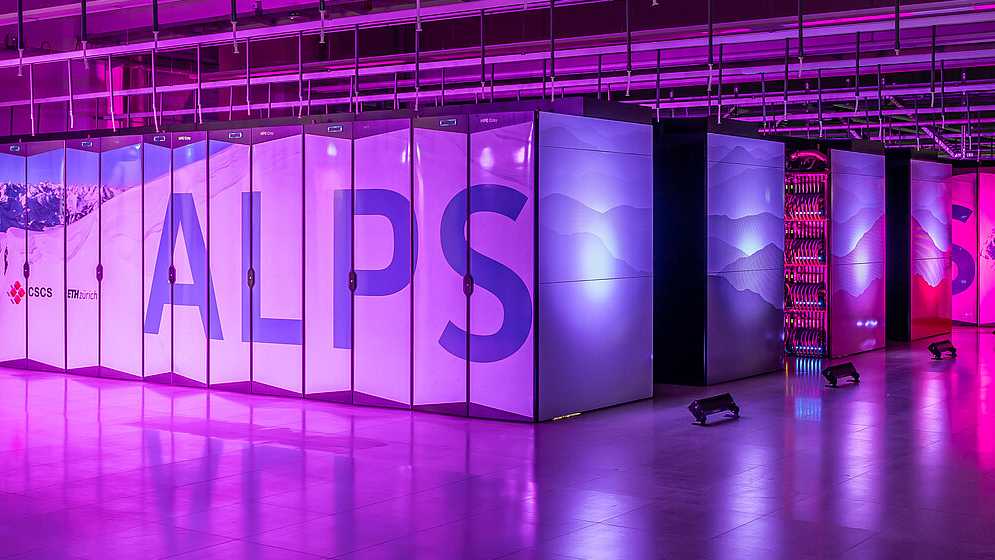
The approval of the proposal “Enhancing multilingual foundation models through lexicographic grounding: advancing GlossAPI for Apertus Greek language integration” by the Swiss AI Initiative is more than a welcome grant decision. It is a recognition that Greek should be treated as critical digital infrastructure in the age of foundation models. According to the approval text you shared, the project will receive 50,000 GPU hours on the Alps supercomputing infrastructure. The Swiss AI Initiative itself defines its mission around open science artifacts for foundation models, powered by the Alps system at CSCS and framed as a large open science and open source effort.
This matters for two reasons. First, it confirms that language inequality in large models is not a peripheral issue. Second, it shows that the answer is not to wait for proprietary foreign platforms to improve Greek on their own timetable. The answer is to build open, documented, reusable language infrastructure so that Greek can be integrated on equal terms into the next generation of models. Research has repeatedly shown that multilingual systems tend to perform unevenly on morphologically rich languages when training resources are limited or poorly aligned, and that multilingual architectures often inherit English-centric biases in fluency and structure.
Why GlossAPI is a common infrastructure and not just a project
GlossAPI should not be understood merely as a technical toolchain. Its real significance lies in its role as a shared infrastructure layer for the Greek language. GFOSS describes GlossAPI as an open source library and technical infrastructure for creating, processing and publishing AI-ready Greek datasets, and notes that it has already produced 15 openly documented datasets grounded in transparency, participation, open standards and ethical AI.
That makes the approved collaboration with the Swiss Apertus ecosystem especially important. It does not only improve one model. It strengthens a reusable mechanism for producing linguistic resources that can support universities, researchers, public institutions, publishers, journalists, educators and Greek technology firms. The crucial shift is from isolated datasets to a stable reference infrastructure: lexicographic resources, morphology, etymology, semantic evaluation benchmarks, documentation, open licensing and reproducible pipelines. That is what public digital infrastructure looks like in the language domain.
What the approved proposal can deliver in practice
The approved proposal aims to integrate lexicographic knowledge from GlossAPI into Apertus multilingual fine-tuning, to develop open multilingual evaluation datasets for Greek, and to release datasets, benchmarks, and checkpoints under open licenses. This aligns closely with the broader promise of open foundation models: transparency in training, auditability, reproducibility and adaptation for public-interest uses. Apertus itself has been presented by ETH Zurich and CSCS as a fully open, multilingual model family released with documentation, source code and open weights, alongside explicit attention to data protection, copyright and transparency obligations.
For GlossAPI, the benefits are immediate and long term. In the short term, access to large-scale compute makes serious experimentation possible in embeddings, semantic alignment and morphology-aware evaluation. In the longer term, it gives GlossAPI institutional weight as a reference point for Greek within international AI systems. In plain terms, Greek stops being only a downstream consumer of foreign models and starts becoming a co-designer of how those models represent language, meaning and culture.
A digital sovereignty opportunity for Greece
The deepest value of this approval may be political as much as technical. It demonstrates that Greek language technology does not need to be organized only around licensing fees, closed APIs and vendor dependency. It can be built as an open European collaboration with academic oversight, open data, open models and transparent processes. At a time when Europe’s digital sovereignty increasingly depends on AI infrastructure, GlossAPI can serve as a public linguistic core for applications in education, research, administration, culture and civic participation.
That is why this approval should be seen not simply as support for one project, but as evidence that Greek can claim a place in the European future of trustworthy and open AI, not as an afterthought, but as a fully legitimate site of innovation.