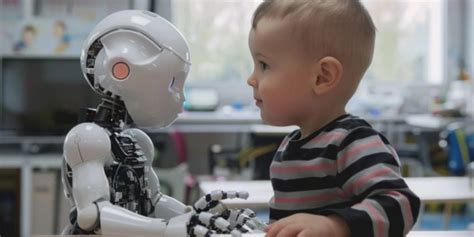

The remarkable progress of Artificial Intelligence has revived an old idea with renewed force: that the human mind is essentially a highly complex computer and that, once we have enough data, enough computing power and sufficiently large models, we will eventually be able to reproduce a human being in a machine.
This assumption sounds plausible because modern AI systems can write, translate, program, solve problems and engage in conversation in ways that often appear human. Yet similarity in behaviour does not prove identity of nature.
The Trap of the “Brain Equals Computer” Metaphor
The computer is an extraordinarily powerful metaphor for describing certain functions of the brain. We process information, remember, predict and make choices. But it does not follow from this that the brain is literally a computer, just as describing the heart as a pump does not mean that it is a pump in exactly the same sense as a mechanical one.
Biology does not neatly separate “hardware” from “software”. The brain is living tissue, continuously shaped by development, the body, hormones, the immune system, the senses, the environment and personal history. Even a single cortical neuron is far more complex than the simple artificial “neuron” used in computational models. The comparison is useful for engineering, but it becomes misleading when it is turned into a theory of what a human being is.
Intelligence Is Not the Same as Consciousness
One of the most important mistakes in discussions about AI is the tendency to confuse capability with experience. A system may produce the correct answer without knowing that it is answering. It may describe pain without feeling pain, write about fear without being afraid and use the word “I” without there being evidence that it experiences a self.
Human consciousness is not simply the ability to solve problems. It is the existence of subjective experience. We see a colour and something happens to us. We feel pain and that pain matters to us. We remember, and memory is connected to a life we recognise as our own.
Science still does not have a generally accepted explanation of exactly how brain activity gives rise to this experience. Major theories of consciousness continue to compete with one another, while recent experimental tests have challenged important predictions made by more than one of them.
The Body Is Not a Peripheral Device
Another critical limitation of the computational metaphor is that it can easily lead us to treat the body as little more than a carrier for the brain. Contemporary neuroscience, however, increasingly demonstrates how deeply consciousness is connected to the regulation of the organism’s life.
Hunger, thirst, breathing, temperature, fatigue, pleasure, pain and the body’s internal states are not decorative pieces of information added to an already existing mind. They participate in shaping the very way in which we exist and perceive the world.
In Antonio Damasio’s approach, feelings associated with homeostasis, the continuous regulation required to keep a living organism alive, form a fundamental basis of subjectivity. This shifts the centre of gravity away from “I think, therefore I am” towards something deeper: I feel as a living body, and through this continuous relationship with life, thought itself acquires meaning.
Imitation Is Not Reproduction
Large language models are extraordinarily powerful systems for predicting and synthesising symbolic sequences. Their capabilities are real. Precisely for this reason, we should avoid anthropomorphic exaggeration. The fact that a machine can imitate a human function does not mean that it reproduces the human being performing that function.
An aeroplane flies without becoming a bird. A computer can defeat the world chess champion without acquiring ambition, anxiety or joy. In the same way, a language model can produce poetry without having had a childhood, mortality, a body, needs, relationships or lived memories. External performance and internal experience are different things.
This is not proof that machine consciousness is metaphysically impossible. It is, however, a strong reason to reject as unsupported the certainty that increasing computational power will inevitably lead to the complete reproduction of a human being.
To defend such a claim, we would first need to know what consciousness actually is, which of its characteristics are necessary and whether those characteristics can exist independently of biological life. Today, we do not know.
What This Means for Education
This distinction is particularly important for schools and universities. Students should neither fear AI nor turn it into a myth. They need to learn how to use it as a powerful tool, how to verify its outputs and how to understand its limitations.
Human learning is not simply the storage of information. It involves curiosity, doubt, social relationships, emotion, responsibility, bodily experience, failure and changes in perspective.
The purpose of education is not to make a student faster than a machine at producing answers. Its purpose is to cultivate judgement, self-awareness, creativity and the ability to live and make decisions together with others.
AI can replace or automate many human functions. This is already happening. But it does not follow that it can replace the human being as an embodied, conscious, social and moral being. The important question, therefore, is not whether the machine will become human. It is whether we, impressed by the machines we create, will begin to treat human beings as if they were machines.
Sources:
Charles Finch, “Michael Pollan Punctures the AI Bubble”, The Atlantic: The review of Michael Pollan’s A World Appears summarises the argument that AI systems’ ability to reproduce cognitive functions is not evidence that they can reproduce consciousness, emotion and lived human experience: https://www.theatlantic.com/books/2026/02/michael-pollans-new-book-pops-ai-bubble/686119/,
Antonio Damasio, “Homeostatic Feelings and the Emergence of Consciousness”, Journal of Cognitive Neuroscience: Damasio proposes that consciousness is grounded in the continuous production of feelings arising from the internal state of a living organism, directly linking subjectivity to the body and homeostasis: https://pubmed.ncbi.nlm.nih.gov/38319678/,
David Beniaguev, Idan Segev & Michael London, “Single Cortical Neurons as Deep Artificial Neural Networks”, Neuron: The study shows that reproducing the functional behaviour of a single biological cortical neuron computationally may require a multi-layer artificial neural network, demonstrating how simplistic the conventional equivalence between biological and artificial neurons can be: https://doi.org/10.1016/j.neuron.2021.07.002,
Cogitate Consortium, “Adversarial testing of global neuronal workspace and integrated information theories of consciousness”, Nature: A large-scale experimental comparison of two major theories of consciousness found results consistent with some of their predictions while challenging central claims of both, confirming that science still lacks a single, definitive theory of consciousness: https://www.nature.com/articles/s41586-025-08888-1.